


Article written by Corneliu Bodea, CEO of Adrem and President of CRE, for Financial Intelligence
The issue of climate change is debated by two main currents of thought, clearly distinct and with established followers, one of them having a wider category of supporters, the other benefiting from a narrower class of sympathizers, included in the first one anyway. The first sphere refers to those who believe in the reality of climate change, without believing at the same time that it has an anthropogenic character, and the second, to those who attribute climate change to human activity from the beginning of the industrial revolutions to the present day.
What is clear to the vast majority, both specialists and ordinary people, is that climate change represents humanity’s greatest challenge in this century. As Nicholas Stern, head of the UK government’s economic service and former chief economist of the World Bank, stated in 2006, almost 10 years after the Kyoto Protocol, which was the first official recognition of the effects of human activity and the first global commitment to reduce greenhouse gas emissions, “climate change is the biggest and largest failure to date” (European Environment Agency, 2016)[1].
In the following, I approach the topic of the fight against climate change from the perspective of pragmatic actions in the current and foreseeable short-term technological context. Currently, according to the International Energy Agency (World Energy Outlook, 2023)[2] and all official sources, more than 80% of the energy consumed globally in all industries, including household consumption needs, is produced from fossil fuels. The major disadvantage of using fossil fuels is greenhouse gas emissions, mainly carbon dioxide (CO2) emissions, which have brought the content of this gas into the atmosphere to over 420 ppm at the end of 2023 from around 300 ppm in 1960 or from about 270 ppm before the industrial age (NOAA, 2023)[3] and (UNEP, 2024)[4]. For reference, the level of CO2 concentration in the atmosphere has not exceeded 300 ppm in the last 800,000 years (Mulhern, 2020)[5]. The link between the concentration of this gas and the effects of global warming throughout the evolution of the Earth is thus unanimously accepted.
These realities have led the political leadership to adopt both globally and especially at the level of the European Union targets for massive reductions, expressed mainly in amounts of emissions or in limiting the increase in the global average temperature by up to 1.5 °C. The Paris Agreement of 2019, the European Green Deal of 2021 or the Fit for 55 package of 2022, represent concrete regulations, measures and reforms necessary to achieve objectives to limit the increase in global temperature, which has effects that are difficult to estimate to the extent that it is not urgently managed.
Indeed, the European Energy Agency has shown that we are already at 1.20C above the pre-industrialized period, and according to the actions taken by the world’s governments (not what we say we do, but what we actually do), it places us in the scenario of increasing the global temperature to over 2-2.5 0C by 2100 (IEA, 2021)[6]. In this regard, carbon emission budgets have been drawn up in order to account for them more strictly, the reality being that out of the emissions of approx. 37 gigatons of CO2 annually, the natural environment consisting of oceans, soil and forests manages to absorb only about 10 gigatons, the rest remaining in the atmosphere and generating greenhouse effect.
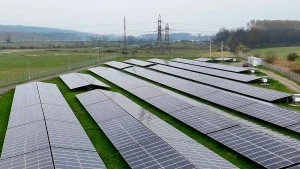
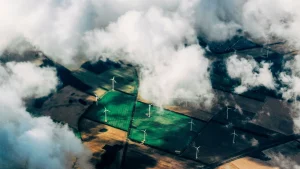
In this difficult context, one of the main measures was to migrate the transport sector from the use of fossil fuels to electrification, and electricity generation to renewable energy sources. Thus, in the field of electricity production, the fight against climate change has become synonymous with the fight against fossil fuels.
Regarding this last aspect, I believe that the direction approached is, if not wrong, difficult to implement both due to the implementation deadlines and the costs and implicitly the feasibility. Replacing about 80% of the amount of energy in terms of production mode could be a much too bold goal in the perspective of this century, assuming that we had so much time.
Returning to the idea of fighting climate change and not against fossil fuels, a promising and gaining traction technology is carbon capture and storage, well known under the abbreviation CCS (Carbon Capture and Storage). This technology would allow the continued use of fossil fuels under the conditions of CO2 capture and storage, with sufficient proven reserves for this century, natural gas for the next 50 years, oil for the next almost 60 years and coal for the next approx. 140 years (Our World in Data, 2020)[7].
This technology, as its name suggests, involves 3 stages: capture, transport and storage of carbon resulting from industrial processes and related emissions. Capture methods involve sequestering carbon before combustion, after combustion or capturing directly from the atmosphere. Carbon transport can be done by pipelines, ships or even road, depending on the distance and infrastructure available. Long-term storage is done in depleted gas or oil reserves, mines, or in an underwater bed made up of permeable rocks. As can be easily understood from the brief description above, CCS technology has the major disadvantage of the additional costs that must be found in the price of energy or other goods and commodities produced using this technology.
There are obviously a number of advantages and disadvantages of this technology, briefly presented below:
- Reducing greenhouse gas emissions: The biggest advantage of CCS is its ability to significantly reduce CO2 emissions from large sources such as fossil fuel power plants and heavy industries, thus helping to achieve climate goals.
- Use in industries difficult to decarbonize: CCS is particularly valuable in industries where reducing emissions is difficult by other means, such as steel, cement, and chemical production.
- Enables the energy transition: CCS can serve as a transition solution, enabling the continued use of fossil fuel resources in a cleaner way while renewable and energy-efficient technologies are developed and deployed on a large scale.
- Economic potential: The use of captured CO2 in agriculture and industrial processes, such as the production of baking soda or the improved use of oil recovery (EOR), can create new economic opportunities.
- Contribution to energy security: By enabling the continued use of fossil fuels in a more sustainable way, CCS can contribute to energy security by providing more time for the development and adoption of renewable energy sources.
- Complementarity with other carbon reduction technologies: CCS can be used in combination with other carbon reduction technologies, such as renewable energy and energy efficiency, to create a cleaner and more diversified energy system.
- Potential for the development of new technologies: Investment and research in the field of CCS can lead to the development of new technologies and processes that can be applied in other areas to reduce carbon emissions.
With all these advantages, it is important to note that CCS is not a one-size-fits-all solution and must be part of a broader portfolio of emission reduction strategies, including the development of renewables and improved energy efficiency. There are also challenges related to high costs, necessary infrastructure, and public acceptance.
Although Carbon Capture and Storage (CCS) technology has significant advantages in the fight against climate change, there are also a number of challenges associated with it:
- High costs: Implementing CCS technology is costly. This includes costs for developing and building the necessary infrastructure, as well as ongoing operational costs for capturing, transporting and storing CO2.
- Reduced energy efficiency: CO2 capture processes can consume a significant amount of energy, which can reduce the overall efficiency of a facility using CCS.
- Risk of leakage: There is a potential risk of stored CO2 escaping from storage sites, which could negate the emission reduction benefits and pose risks to human health and the environment.
- Space and location needs: Suitable locations for CO2 storage are limited and must be geologically stable. It must also be close enough to emission sources to minimise the costs and emissions associated with transport.
- Impacts on land use: Building the necessary infrastructure for CCS can have a significant impact on land use and affect local ecosystems.
- Long-term management: Long-term safe storage of CO2 requires continuous monitoring and management, which raises questions about long-term responsibility and financial sustainability.
For these reasons, CCS is often seen as part of the solution, and not as a panacea, in efforts to reduce carbon emissions and combat climate change. It is important that the development and deployment of CCS is balanced with investments in renewables and other emission-reducing technologies.
Given the potential of this technology, as well as the particular importance in the economy of the fight against climate change, several global or local initiatives have been set up to help develop and promote it, most of them monitored and reported by the Global Institute for CCS[8]. Countries such as the United States of America or Canada, the Netherlands or the United Kingdom in Europe are investing heavily in the development of CCS capacities. Currently, capture and storage capacities exceed 50 million tonnes, and projects under development, when commissioned, will total a capacity of approximately 360 million tonnes of CO2 (Global CCS Institute, 2023)[9]. It is thus easy to understand that we are still far from the level of emissions of about 37 gigatons of CO2 per year, even if we were to decrease the capacity of the natural environment to absorb by about 10 gigatons of CO2 per year, the difference being substantial.
It thus becomes crucial that the pace of commissioning of this technology exceeds a factor of 2-3 per year (today it is only 35% per year) in order to hope that by 2050 the use of fossil fuels for about 50% of the electricity production consumed will be CO2-free.
Read the rest of the article on financialintelligence.ro
[1] European Environment Agency, 2016, On climate change, On climate change — European Environment Agency (europa.eu)
[2] International Energy Agency, 2023, World Energy Outlook, World Energy Outlook 2023 – Analysis – IEA
[3] National Oceanic and Atmospheric Administration – NOAA, 2023, Greenhouse gases continue to grow rapidly in 2022, Greenhouse gases continued to increase rapidly in 2022 | National Oceanic and Atmospheric Administration (noaa.gov)
[4] United Nations Environment Programme – UNEP, 2024, Atmospheric CO2 Concentration | WESR – Climate Change (unep.org)
[5] Mulhern, O., 2000, A Graphical History of Atmospheric CO2 Levels Over Time | Earth.Org
[6] International Energy Agency, 2021, Scenario trajectories and temperature outcomes – World Energy Outlook 2021 – Analysis – IEA
[7] Our World in Data, 2020, Fossil Fuel Reserves, Years of fossil fuel reserves left, 2020 (ourworldindata.org)
[8] Home – Global CCS Institute
[9] Global CCS Institute, 2023, Global Status of CCS in 2023, Global-Status-of-CCS-Report-Update-23-Nov.pdf (cloudinary.com)